

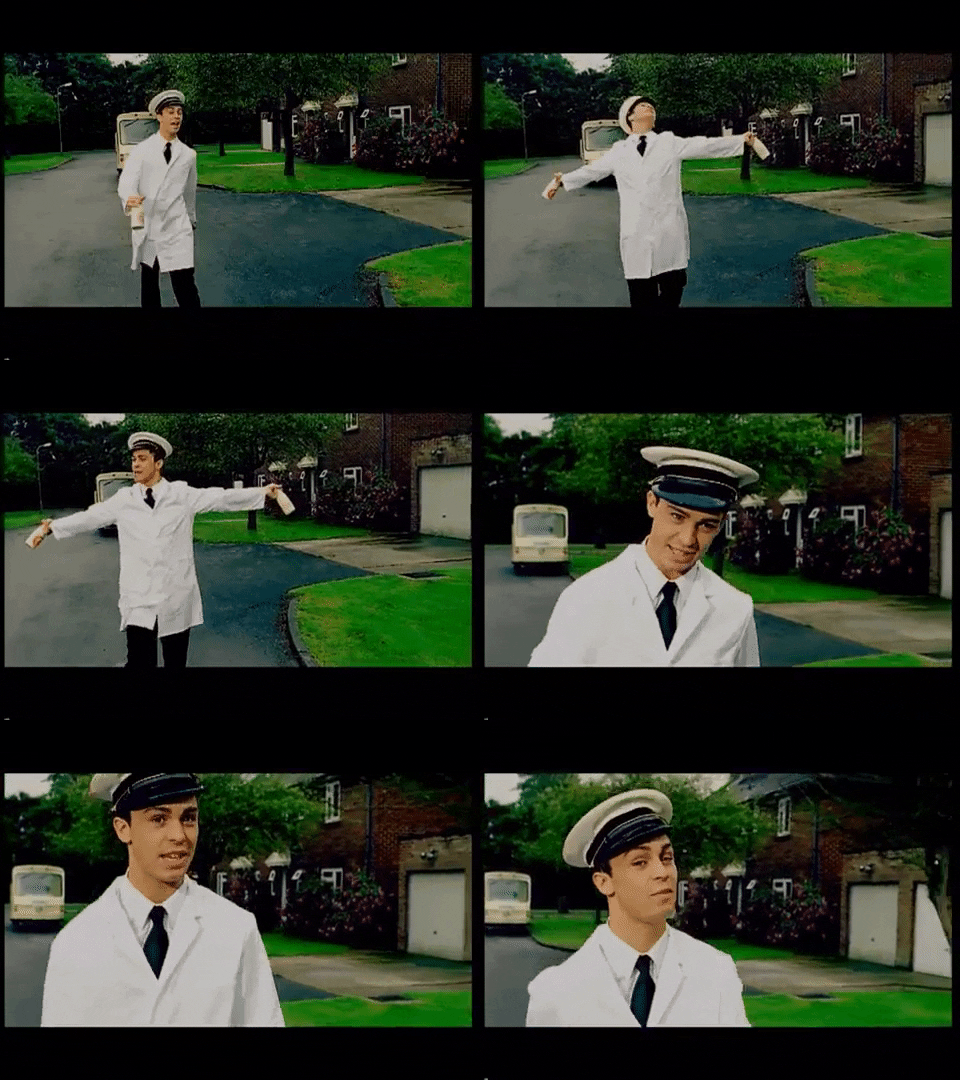


There is a reason milk shows up so often in cultural jokes about fatherhood and family breakdown.
People say:
“Your dad left to go buy milk.”
Or:
“Mom was flirting with the milkman.”
Even modern shows like South Park have played with the old “milkman” idea because milk has become a cultural symbol for the home, the child, the mother, the father, and the everyday needs of a family.
But when you slow the joke down, it gets serious.
A gallon of milk in Los Angeles may cost around $4–$5, with many stores placing regular dairy milk closer to $5 a gallon.
The average child support payment may be around $441 a month — a national average based on commonly cited child support reporting.
So the joke is not really about milk.

It is about the difference between a man casually disappearing from the household and the real monthly cost left behind for the mother and child.
Milk is cheap.
Absence is expensive.
And perhaps what makes the joke especially cruel is that it often turns abandonment into comedy.
The phrase “dad went to buy milk” is usually delivered as a punchline.
But for many children and mothers, absence is not a joke.
It can mean unpaid bills.
Emotional grief.
Interrupted stability.
And the sudden transfer of responsibility onto one parent.
A child still needs food, clothes, transportation, shelter, school supplies, medical care, emotional support, supervision, and protection.
And society often expects women to maintain all of this while carrying the emotional burden quietly.
The expectation can become paradoxical:
Be strong.
Keep the household running.
Remain emotionally available.
Maintain patience.
Continue working.
Continue mothering.
Continue healing.
And somehow do so without appearing angry, exhausted, overwhelmed, or affected by the very absence society has already normalized enough to joke about.
That does not mean every family story is identical.
Nor does it erase the many fathers who are deeply present and committed.
But the popularity of the “milk” joke reveals something uncomfortable:
Society has grown familiar enough with parental absence that it became comedy.
So when society jokes that “dad left to buy milk,” the deeper truth is this:
He may have left for something that costs $4–$5.
And in some situations, some fathers will not even be present long enough for the joke to have context.
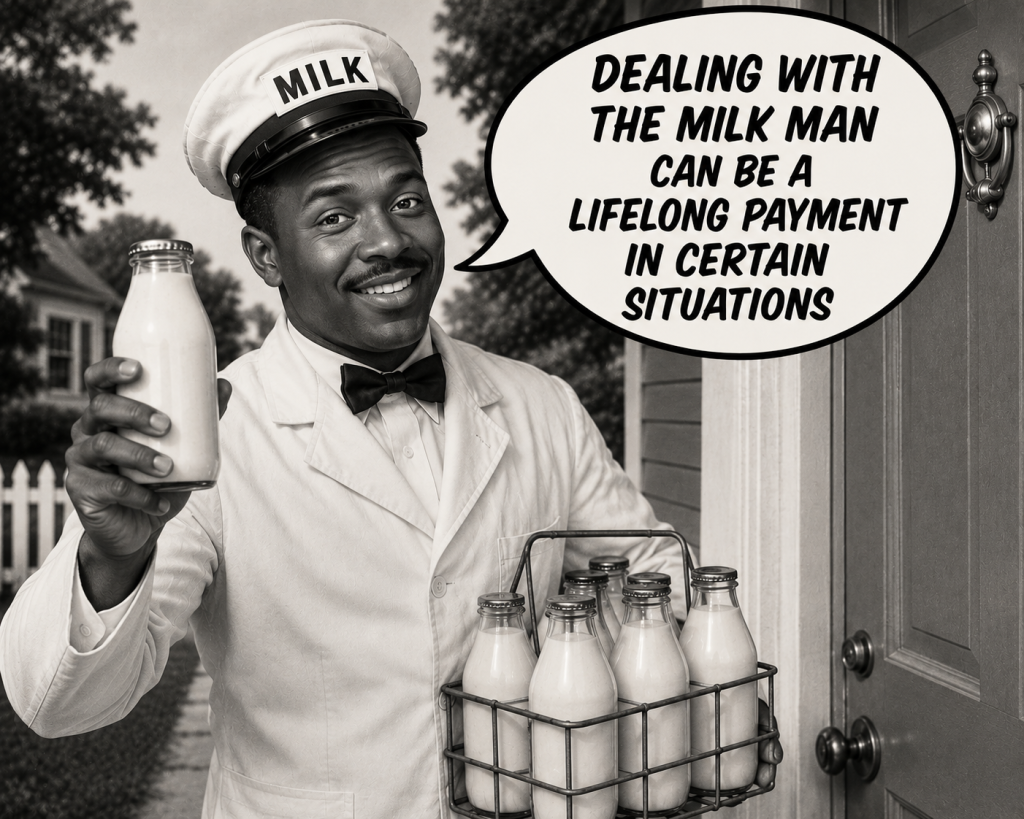
No milk run.
No dramatic exit.
No story to laugh about.
Just absence.
And for many mothers, that $4–$5 may not represent what he spent—
it may represent what is now coming out of your own pocket, or in some situations, out of the $441 monthly child support average, money that may already be stretched trying to cover housing, food, transportation, diapers, childcare, and daily life.
But the child was left needing hundreds, thousands, and eventually years of support.
Support is not measured in a single payment.
It is measured in time.
In sleepless nights.
In rides to appointments.
In diapers.
In groceries.
In school supplies.
In birthdays.
In emotional availability.
In protection.
In guidance.
And in the daily labor required to help another human being grow safely into adulthood.
Children do not stop needing support after infancy.
Needs evolve.
A baby needs feeding and physical care.
A toddler needs supervision and patience.
A school-aged child needs structure and stability.
A teenager needs guidance, boundaries, and emotional presence.
And throughout those years, someone must remain steady enough to help carry that weight.
So the decision being made in moments of realization is not always simply about another adult.
It is often about direction.
Whether or not you are willing to accept the challenge before you.
Or whether it is time to shift directions—both physically and mentally.
And for some women, even while choosing to continue the pregnancy and welcome the child, mental fortitude may still become necessary for future decisions.
Not every decision must be made immediately.
But clarity matters.
Because recognizing a “milk man” dynamic is not merely identifying disappointment.
It is identifying reality.
And reality asks difficult questions.
What environment will best support peace?
What boundaries will protect emotional and financial stability?
What support systems are needed?
What patterns should continue?
And what patterns should end?
This is not about panic.
And it is not about shame.
It is about honest evaluation.
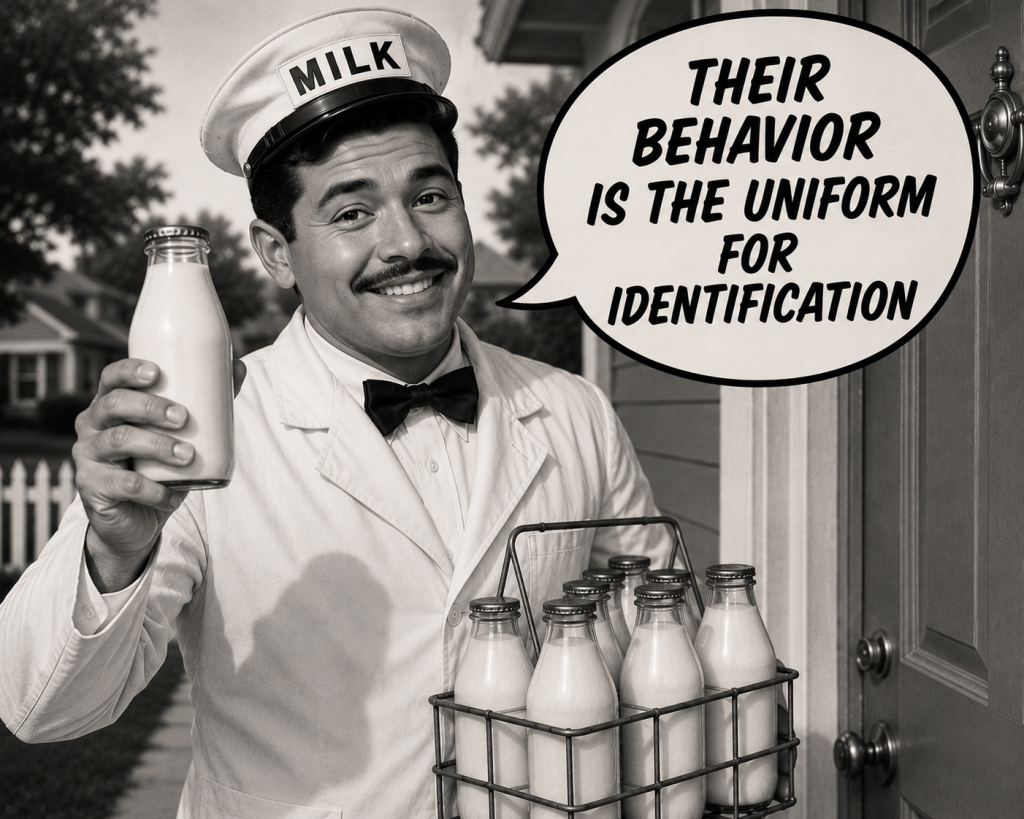
Because once the honeymoon glasses have worn thin, the question becomes less about what someone promised—
and more about what they consistently demonstrate.
And sometimes strength is found in accepting the challenge ahead.
Sometimes strength is found in shifting directions.
But in either case, mental clarity, boundaries, and future-focused decision making become part of protecting yourself from living indefinitely inside The Waiting Place.
Because the waiting does not always begin after someone leaves.
Sometimes it begins while they are still there.
And sometimes the “milkman” realization does not happen after birth.
Sometimes women realize they have a “milk man” while they are still pregnant.
The honeymoon glasses have worn thin.
The excitement, chemistry, hope, or assumptions that once carried the relationship begin to meet reality.
And reality asks different questions.
Who shows up?
Who prepares?
Who follows through?
Who remains present when responsibility becomes inconvenient, expensive, exhausting, or no longer romantic?
For some women, pregnancy becomes the moment where affection and accountability stop looking like the same thing.
And this can create an especially painful kind of waiting.
Not always waiting for money.
Not always waiting for perfection.
But waiting for consistency.
Waiting for effort.
Waiting for partnership.
Waiting to see whether words will become action.
And in that uncertainty, some women may recognize something described years ago by Dr. Seuss in The Waiting Place:
“…for people just waiting…”
Waiting for calls.
Waiting for plans.
Waiting for commitment.
Waiting for change.
Waiting for the version of someone they hoped would appear.
That is why The Waiting Place matters here.
Because the “milk man” is not always a person who disappears overnight.
Sometimes the milk man is uncertainty itself.
Sometimes it is prolonged inconsistency.
Sometimes it is the exhausting emotional labor of waiting for demonstrated responsibility that never fully arrives.
And that waiting place can become emotionally heavy because pregnancy itself does not pause while people figure themselves out.
The baby continues growing.
Appointments continue.
Bills continue.
The body changes.
The responsibilities approach.
So while the “dad went to buy milk” joke is often told as something sudden or distant, some women experience a quieter version first:
Not disappearance.
But uncertainty.
Not absence from the map.
But absence from responsibility.
And sometimes that realization hurts long before anyone physically leaves.
And after identifying a “milk man,” there are often crossroads.
Not every woman chooses the same path.
And not every path looks identical.
But recognition creates decisions.
For women who are pregnant and beginning to recognize instability, inconsistency, or emotional absence, two paths often emerge.
The first path is to spend the rest of the pregnancy preparing.
Preparing to deliver a healthy, happy baby.
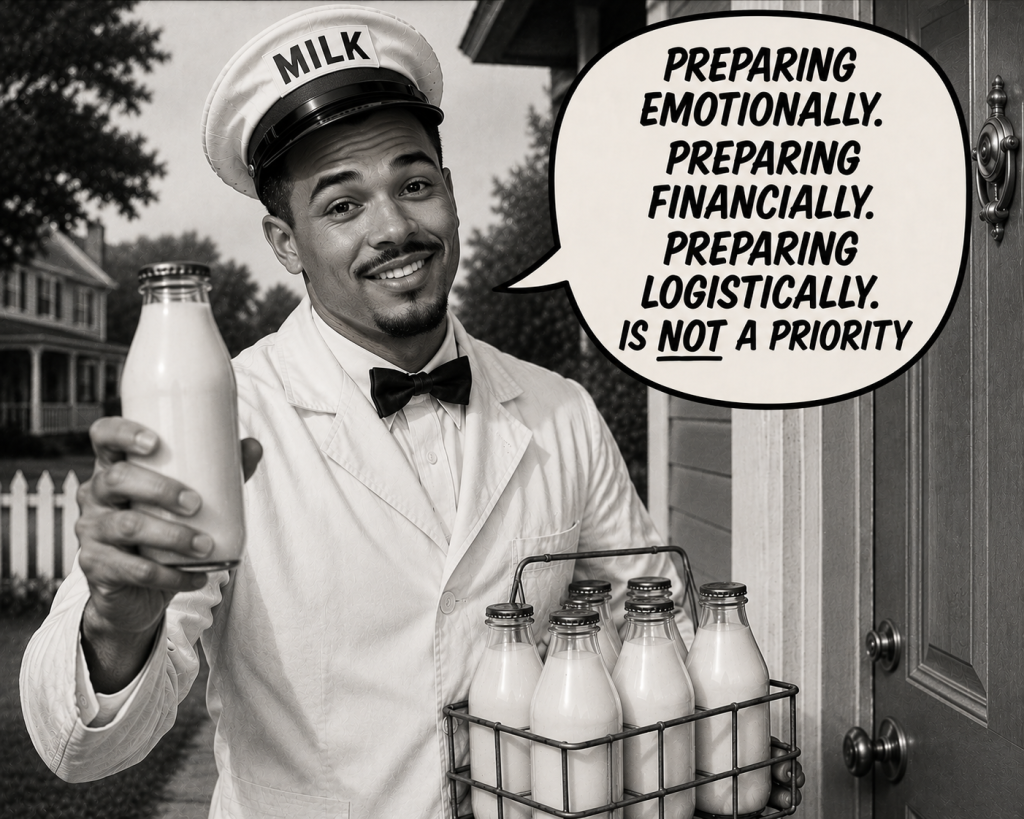
Preparing emotionally.
Preparing financially.
Preparing logistically.
And preparing to establish the boundaries and support systems necessary to properly raise the child despite the obstacles a “milk man” dynamic may bring.
This path is not built on denial.
It is built on clarity.
The focus shifts.
From waiting to preparation.
From chasing certainty in another adult to creating stability for the child.
From hoping responsibility will suddenly appear to intentionally building the environment the baby will need.
That may mean strengthening family support.
Creating financial plans.
Learning parenting skills.
Protecting emotional energy.
And establishing firm expectations around access, co-parenting, accountability, and respect.
The second path may involve choosing not to engage in motherhood within that dynamic.
Not choosing to parent inside instability.
Not choosing to build a family structure around inconsistency.
Not choosing another “milk man.”
Not romanticizing inconsistency.
Not confusing chemistry with commitment.
Not ignoring the lessons that reality has already provided.
This path is not about bitterness.
And it is not about closing the heart.
It is about developing discernment.
Boundaries.
Standards.
And a clearer understanding of what presence, reliability, and partnership actually look like.
Both paths may look different on the outside.
But underneath, they often point toward the same destination:
Not doing another milk man.
Because whether a woman chooses to focus entirely on preparing for the child in front of her, or chooses not to engage in motherhood within a dynamic she believes may compromise her peace, stability, or future, the deeper goal remains similar:
Protect the future.
Protect peace.
Protect the self.
And make decisions from clarity rather than prolonged residence inside The Waiting Place.
Because waiting is not a life plan.
Preparation is.
Boundaries are.
And clarity can sometimes become the beginning of peace.
And no matter where you stand—
Whether you are pregnant and choosing to move forward,
Or choosing not to engage in motherhood within this dynamic—
identifying the “milk man” is often the first step.
Because reality cannot be navigated until it is recognized.
The milk man is not always loud.
Not always cruel.
Not always absent in obvious ways.
Sometimes the milk man is inconsistency.
Sometimes it is emotional vacancy.
Sometimes it is repeated uncertainty disguised as potential.
And once identified, decisions become possible.
For some women, that decision means choosing to mother despite the obstacles.
Choosing preparation.
Choosing boundaries.
Choosing to build stability around the child despite what may be lacking in another adult.
And for others, that decision may mean choosing not to mother within this dynamic.
Choosing not to enter parenthood under conditions they believe may compromise peace, stability, emotional wellbeing, or future goals.
Neither path erases difficulty.
But both begin with clarity.
And both move away from prolonged residence inside The Waiting Place.
So remember:
The first step is identification.
The next step is decision.
And whatever path is chosen—
whether choosing to mother despite the obstacles,
or choosing not to within this particular dynamic—
the deeper goal remains the same:
No more milk men.
Leave a Reply