
The In Between: For the Woman Deciding Whether to Continue Her Pregnancy
I was listening to an Alan Watts lecture once, and he made an observation that stuck with me.
Imagine an alien arriving on Earth and trying to understand what this strange planet does.
It might look around and conclude:
The Earth peoples.
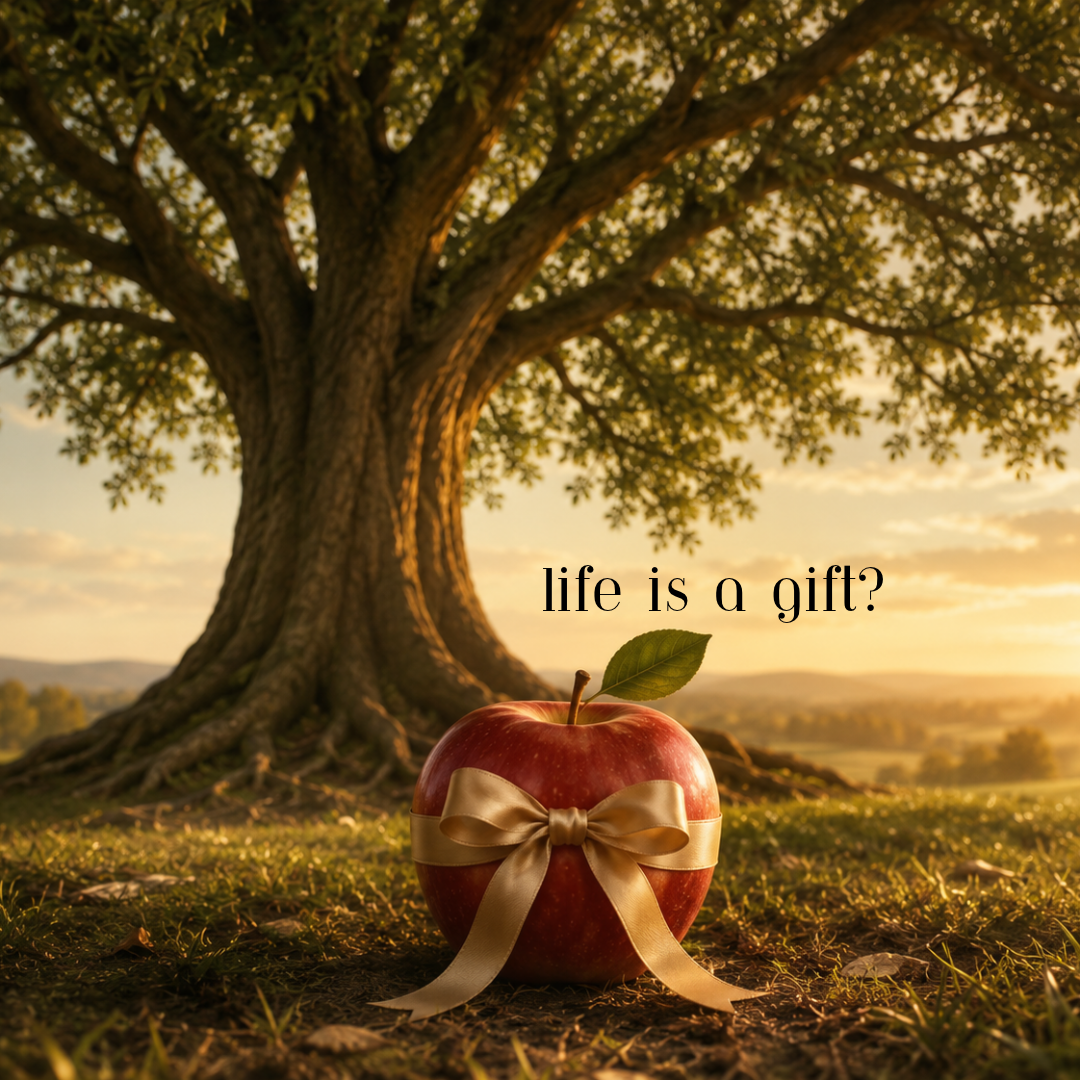
The same way an apple tree apples.
People come out of this Earth. We grow here. We are made from what is already here.
I love that idea.
But it also makes me think about another saying:
The apple doesn’t fall far from the tree.
So if we’re going to call the creation of another human being a gift, perhaps before we admire the apple, we should spend a little time evaluating the branch it’s about to fall from.
And in this particular situation, you’re the branch.
Your life.
Your circumstances.
Your relationships.
Your resources.
Your decisions.
Your environment.
Your capacity.
Not because you need to be perfect.
Not because a child needs to be born into wealth.
But because if you’re deciding whether to create and raise another human being, it is reasonable to examine what that human being would actually be entering.
First, Let Me Be Clear About Who This Is Written For
If you’re here reading this article, I’m writing under the assumption that you’re considering an abortion.
More specifically, I’m writing to the woman who can continue her pregnancy but isn’t sure whether she wants to.
You’re somewhere in between.
That’s why this article lives in The In Between.
You may be leaning toward abortion.
You may be leaning toward continuing your pregnancy.
You may change your mind three times before you finish reading this.
That’s okay.
This isn’t an article about telling you what decision to make.
It’s about giving you another question to consider while you’re making it.
If you’re experiencing pregnancy loss or miscarriage, there are separate articles here specifically written for those experiences, and you’re more than welcome to read them.
But this particular conversation is for the woman looking at a pregnancy she could medically continue and asking herself:
Do I want to?
And if I do:
What am I actually preparing to give?
“Life Is a Gift”
People love to say that life is a gift.
And maybe it is.
But I’ve always thought that statement deserved a second sentence.
What kind of gift are you giving?
Because giving someone life and giving someone a childhood are not separate events.
The moment you decide to continue a pregnancy, you aren’t merely choosing a baby.
You’re beginning a human story.
And that person is going to enter circumstances they had absolutely no role in creating.
They’re going to get your current reality as their starting point.
That’s worth examining.
The Question I Asked My Mother
Years ago, I asked my mother a very simple question:
“Would you swap childhoods with me?”
She said no.
That’s it.
And honestly, I don’t need to give you twenty pages of family history to explain why that answer mattered to me.
My mother knew her childhood.
She knew mine.
I asked whether she would exchange places with me.
She wouldn’t.
That answer stayed with me because it exposed something incredibly simple:
Sometimes a parent can understand why she made every decision she made and still recognize that she would not want to be the child who experienced the consequences of those decisions.
That doesn’t necessarily make her evil.
It doesn’t mean she didn’t love her child.
It doesn’t even mean every decision she made was avoidable.
But it introduces a perspective that I think gets lost when we’re deciding whether to have children.
We spend enormous amounts of time imagining ourselves as the mother.
Maybe we should spend a few minutes imagining ourselves as the child.
Switch Seats
You’re considering continuing your pregnancy.
Okay.
For the next few minutes, stop being Mom.
You’re the baby.
And you’re about to be born directly into your current life.
Same income.
Same housing.
Same partner.
Same relationship.
Same family.
Same support system.
Same emotional environment.
Same financial situation.
Same childcare possibilities.
Same transportation.
Same stability.
Same uncertainty.
Same everything.
And here’s the catch:
You don’t know anybody’s intentions.
You’re a baby.
You don’t know Mom intends to finish school.
You don’t know Dad says he’s going to get himself together.
You don’t know somebody promised to help with childcare.
You don’t know Grandma said you could stay there until you get on your feet.
You don’t know a promotion might be coming.
You don’t know everybody swears things are going to get better.
You only experience what actually happens.
So forget what everybody intends to do for a moment.
Look at what exists.
And ask yourself:
Would I want to be born into this?
Not:
Could a child survive this?
That’s a much lower standard.
I’m asking:
Would you choose it?
Evaluate the Branch
Go back to the apple tree.
If you’re the branch this little apple is growing from, take an honest look at the branch.
Is it stable?
Is it hanging on?
Is it growing?
Is it damaged but healing?
Is somebody constantly sawing at it?
Are you waiting for another branch to hold you up?
Are you expecting the apple itself to somehow make the branch stronger?
Because that’s another thing worth considering.
A baby cannot become the support structure for the life into which the baby is being born.
A child cannot fix your relationship.
A child cannot make somebody commit.
A child cannot turn an unreliable person into a reliable parent.
A child cannot create money.
A child cannot heal loneliness.
A child cannot become your reason to finally become stable and simultaneously be responsible for surviving the period while you’re trying to become stable.
Maybe having that child motivates enormous positive changes in you.
That absolutely happens.
But the child still has to live through whatever happens between who you are today and who you’re hoping to become.
So evaluate the branch as it exists.
Would You Swap Childhoods With Your Child?
This is the question my mother’s answer eventually gave me:
Would you swap childhoods with the child you’re considering having?
Imagine yourself eighteen years from now.
Your child is sitting across from you.
They know your childhood.
You know theirs.
And they ask:
“Mom, if you could choose, would you have rather grown up the way you did or the way I did?”
What do you hope your answer will be?
More importantly:
Based on the information you have today, what do you think your answer would be?
That’s not meant to shame you.
It’s meant to give you information.
What If Your Answer Is No?
Maybe you actually did it.
You switched seats.
You looked at your life from the child’s perspective.
And your honest answer was:
No.
I wouldn’t choose this childhood.
Okay.
Now we have information.
But I want to make something extremely clear:
No does not automatically mean abortion.
And it doesn’t automatically mean birth.
No is not a command.
No is information.
This is also why reproductive autonomy matters.
The American College of Obstetricians and Gynecologists describes pregnancy-options counseling as something that should preserve a woman’s reproductive autonomy rather than assume which pregnancy outcome she should choose based upon somebody else’s judgment of her circumstances.
A woman can examine her circumstances and decide to have an abortion.
Another woman can examine similar circumstances and decide to continue her pregnancy and parent.
Another can continue the pregnancy without parenting.
The purpose of honest reflection isn’t to remove your ability to decide.
It’s to give you better information while you’re deciding.
So if your answer is no, the next question becomes:
Why?
If You’re Leaning Toward Abortion
Why wouldn’t you want this childhood?
Money?
Housing?
The relationship?
The person you’re pregnant by?
Your career?
School?
Your existing children?
Your support system?
Your emotional capacity?
The simple fact that you don’t want to be a mother?
Maybe it’s several things.
Whatever your answer is, don’t immediately argue with yourself.
Listen to it.
Maybe what you’re discovering isn’t:
“I never want children.”
Maybe it’s:
“I don’t want to have a child like this.”
Those statements are very different.
If you choose abortion, that information can still matter after the pregnancy ends.
What would you want to be different before another pregnancy?
Maybe you want stable housing.
Savings.
A different relationship.
A stronger support system.
A degree.
A career.
Maybe you want to become much more intentional about preventing another pregnancy until you’re ready.
Or maybe this process helps you realize that you don’t want motherhood at all.
That’s information too.
The purpose isn’t to turn abortion into punishment for failing some imaginary readiness test.
It’s to understand the decision you’re making and what it tells you about the life you want afterward.
If You’re Leaning Toward Birth
Maybe your answer is still:
No. I wouldn’t choose these circumstances.
But something else inside you is saying:
I’m having my baby.
Okay.
Your autonomy doesn’t disappear because your circumstances aren’t ideal.
Now the exercise becomes a planning tool.
Why did you answer no?
Write those reasons down.
Housing?
Let’s work on housing.
Money?
Let’s make an actual financial plan.
Childcare?
Start researching it now.
Transportation?
How are prenatal appointments, pediatric appointments, work and emergencies going to happen?
Support?
Who has actually demonstrated that they’re willing and able to help?
The other parent?
This one matters:
Plan around who that person has demonstrated themselves to be—not who pregnancy makes you hope they’ll become.
If they become better, wonderful.
But don’t make their potential the foundation underneath your child.
Your answer of no just showed you where the weak spots are.
Now you have something to work with.
Some Things Cannot Be Fixed Before Birth
You aren’t going to solve your entire life during a pregnancy.
That’s not the expectation.
You might not double your income.
You might not repair your relationship.
You cannot force another adult to become responsible.
You can’t manufacture a supportive family.
You may not be able to move immediately.
You certainly aren’t going to become a flawless human being.
So divide the problems into three categories:
What can I change?
What can I find support for?
What do I need to accept and realistically plan around?
That third category matters.
Sometimes preparation for motherhood means accepting something you desperately wish weren’t true.
Maybe he isn’t going to help.
Maybe your mother isn’t going to become your village.
Maybe the promised money isn’t coming.
Maybe you’re going to be doing significantly more of this alone than you imagined.
You can still choose birth.
But if that’s your choice, build your plan around reality.
Hope is allowed. Hope just isn’t a logistical plan.
Continuing the Pregnancy Doesn’t Automatically Mean Parenting
There is also another possibility.
You may decide that you don’t want an abortion but also don’t want or aren’t prepared to parent.
Continuing a pregnancy without parenting, including exploring adoption, is another path a woman may consider.
That isn’t an emotionally simple alternative.
Pregnancy, birth, relinquishment and adoption have their own physical and emotional realities and deserve thoughtful consideration.
But it’s part of the options conversation.
Again:
This article isn’t trying to make your decision for you.
Your Childhood Is Data, Not the Minimum Requirement
Now turn the question around again.
Think about your childhood.
What happened to you that you don’t want to happen to your child?
People sometimes say:
I grew up broke and I’m fine.
My parents fought and I survived.
My dad wasn’t around and I made it.
We moved constantly and I turned out okay.
Okay.
But surviving something doesn’t automatically make it something worth recreating.
Survival is not a parenting philosophy.
Your childhood is information.
Use it.
What worked?
What didn’t?
What hurt?
What helped?
What did you desperately need?
What did your parents give you that you absolutely want your child to have?
What did they give you that ends with you?
You don’t need to give your child a perfect childhood.
That’s impossible.
But perhaps the goal of one generation should be to make the starting point of the next generation a little better.
Your child doesn’t need to prove that they can survive everything you survived.
If your childhood gave you things that took years of adulthood to recover from, maybe one of the greatest gifts you can give your child is:
fewer things from which they have to recover.
So, Is Life a Gift?
Maybe.
I actually like thinking of it that way.
The Earth peoples.
The apple tree apples.
And somehow, here we are.
Another little human being has started growing from the branch.
But you’re standing in The In Between right now.
You haven’t decided what happens next.
And because you haven’t decided yet, you have an opportunity to ask questions that are much harder to ask once the decision has already been made.
So before somebody tells you:
“Life is a gift.”
Finish the sentence for yourself.
What kind of gift am I currently prepared to give?
Look at the branch.
Not with shame.
Not through somebody else’s religion.
Not through somebody else’s politics.
Not through your partner’s promises.
Not through your parents’ expectations.
Look at your actual life.
Then switch seats.
Imagine receiving it instead of providing it.
And ask:
Would I swap childhoods with my child?
My mother had the benefit of answering that question after my childhood had already happened.
I asked her:
“Would you swap childhoods with me?”
She said no.
I can’t change her answer.
I can’t change the childhood that produced it.
But if you’re reading this while you’re still in The In Between, your child’s childhood hasn’t happened yet.
That’s the difference.
You are still deciding.
Maybe you choose abortion.
Maybe you choose birth and parenting.
Maybe you continue the pregnancy without parenting.
Whatever you choose, the question isn’t supposed to decide for you.
It’s supposed to help you see clearly before you decide.
Because no is not a command.
It’s information.
And yes is information too.
The decision still belongs to you.
But before you decide whether this particular apple will continue growing—
take an honest look at the branch.
Leave a Reply