Women are often asked who will carry on their name if they do not have children. Less often are they asked what they want that name to represent.
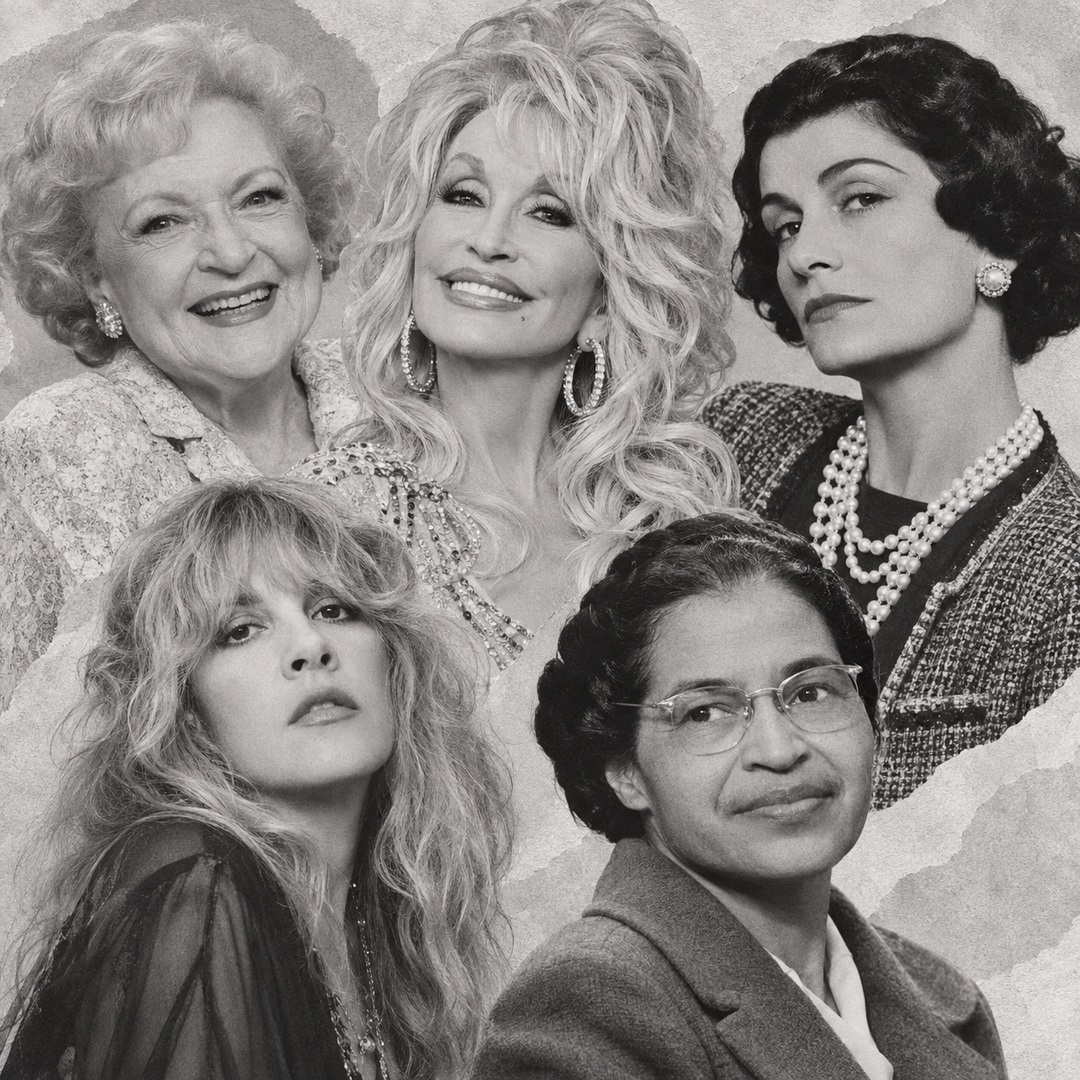
Betty White. Dolly Parton. Coco Chanel. Stevie Nicks. Rosa Parks.
Their names offer a different way to think about legacy. Through television, music, business, fashion, and activism, these women built lives whose influence extends far beyond biological descendants.
Their histories are different. Betty White was a stepmother, and we should not assume that every woman who did not have children arrived there for the same reasons. What connects their stories is a broader truth: raising biological children is not the only way a woman can live a meaningful life.
A Note About This Article’s Focus
Including a woman in this article does not imply that she had an abortion or supported abortion rights. Those are separate matters that should never be assumed from whether she had children. Stevie Nicks has publicly discussed her abortion and her support for abortion rights; her experience should not be attributed to the other women mentioned here. www.rollingstone.co.uk
As a doula, I encourage women who are voluntarily choosing sex to consider celibacy as a way to avoid pregnancy rather than face a decision about abortion. My focus here is the child-free outcome: showing that a woman can live a full, meaningful life and leave a lasting legacy without having biological children.
Betty White: Knowing What She Wanted
Betty White spoke openly about choosing her career over having biological children. In interviews, she explained that she knew how completely motherhood would have absorbed her attention. She did not believe she could give both parenting and her work the commitment she wanted to give them.
She also had three stepchildren through her marriage to Allen Ludden and valued those relationships. When discussing her decision, she said she had never regretted it. Her story includes both a deliberate reproductive choice and an important family role. transcripts.cnn.com
A woman can choose not to become pregnant and still have love, family, and lasting connections with children.
White’s honesty also challenges the assumption that every woman will eventually wish she had given birth. Some women understand their priorities and remain comfortable with them.
Dolly Parton: Freedom to Build a Life
Dolly Parton has directly connected not having children with the freedom to pursue her work. In a 2020 interview, she explained that her circumstances allowed her to devote herself to her career and undertake projects such as the Imagination Library, which provides free books to young children. www.goodmorningamerica.com
Her life illustrates how a woman can care deeply about children without raising children herself.
It also makes the practical side of reproductive decisions visible. Time, energy, and attention have limits. Parenthood changes how those resources are used. Recognizing that reality is part of making an informed decision about the life a woman wants.
Coco Chanel: A Name Carried Through Work
Gabrielle “Coco” Chanel never married or had children. Her name became internationally recognizable through fashion and the business she founded. touchebooks.com
Her example challenges the narrow idea that a family line is the only way a woman’s name can survive her.
Recognizing that point does not require treating every part of her life as admirable. It acknowledges that professional influence can endure across generations without direct descendants.
Stevie Nicks: Taking Her Own Ambitions Seriously
Stevie Nicks has spoken candidly about choosing an abortion while pursuing her music career. In a 2024 interview, she explained that she believed raising a child would have required years away from the band and that she expected much of the responsibility would have fallen on her. www.rollingstone.co.uk
Her account brings the conversation beyond pregnancy itself. Having a baby involves decisions about years of care, work, relationships, and responsibility.
Including her experience here acknowledges her account of her life. The broader point of this article remains that a woman’s ambitions, time, and future deserve serious consideration when she thinks about whether she wants children.
Rosa Parks: A Legacy That Reached Generations
Rosa Parks and her husband, Raymond, had no children. Yet children were an important part of her life, and her commitment to future generations extended through her activism and work with young people. The Library of Congress documents those connections, while the Rosa and Raymond Parks Institute for Self Development, which she co-founded in 1987, carried that commitment forward. blogs.loc.gov
Her story belongs in this conversation without assuming why she did not have children or assigning feelings to her that she did not publicly express.
Parks helped change the world that other women’s children would inherit. Her influence reached generations without depending on biological descendants.
When someone asks how a woman without children can leave a legacy, Rosa Parks is a powerful answer. We remember her name because of what she stood for, what she risked, and what she helped make possible.
An Ordinary Woman Deserves the Same Freedom
These women’s accomplishments make their stories visible. But a woman should not need fame, wealth, a charitable foundation, or a legendary career to justify not having children.
She can want a quieter life. She can value her independence, relationships, creativity, or rest. She can simply have no desire to parent.
She does not owe the world an extraordinary achievement in exchange for her decision not to become a mother.
Motherhood can be deeply meaningful for a woman who wants it. A life without raising children can be deeply meaningful, too.
A woman’s life does not become complete only when she gives birth. It already belongs to her.
Leave a Reply